Friday, July 31, 2020

Observation vs Discernment: War Plan


And here is the difference between an observer and a discerner. The first time I saw Obama (turn of century) “the rising star” I knew he was a hypnotic-master wearing a CIA cutout suit. When he spoke people stood in hypnotic awe, with frozen smiles on the faces as he read the TelePrompter with more talent than I had ever before witnessed, reading with hypnotic cadence and swaying from side to side as he rhythmically turn from right prompter to left just like the swing of a pocket watch. People didn’t hear what he had to say they felt what he was saying. There was no rational comprehension and analysis, nothing he said was note worthy or controversial, no memorable lines just a steady diet of everyone’s wet dreams. What people got from the experience was nebulous sense of Hope and Change that by some means of magic would be fair and elevating for all. There was never the suspicion that the entire world economy had been Purposely Crashed so his hypnotic Marxist message would have fertile ground in people struggling with fear and despair.

For your own education google one of Obama’s 2008 rallies and then one of Trump’s 2016 rallies and behind Trump you will see instead of frozen smiles and hushed reverence people animated, talking to one another, commenting on what they were hearing and seeing; even discussing what he was saying as he was speaking; people engaged instead of hypnotized. Instead of the “perfect Obama speech” they got a symphonic non-canned speaker, starting and stopping, digressing and tying in the digression, engaging them with questions over and over. Fast forward to today 90+ days to go. Once again the Globalists have tried with every tool at their disposal to crash the world economy, they have created panic in a pandemic, but failed to turn Covid into Trump’s Katrina. Having shot their charismatic savior wad in Obama and as far as I can see they have no CIA-charismatic cutout in the wings... well they have prospects but none that will vet and the American people have taken control the vetting process themselves. Leaving them the anti-Obama in the Covid Basement, a man total devoid of any oratory skills mumbling through limited exposures. Instead they have turned all their time and energy, with the power of the FAKE public health establishment and its Continuation of Government Powers and Communist Chinese Controlled media via Multi-front suicidal Asymmetric Warfare to destroy however much of America and the world, for that matter, to hamstring, neutralize and Kill Trump and the American Conservative Nationalist Movement. They intend to kill us, no joke. Inside this very real context Lionel is shocked that Obama would use the corpse and memory as a weapon of asymmetric war? You see he is a keen observer, I am a practiced discerner who knew the weapon value of that corpse. The enemy asymmetric war strategists are always steps ahead of people whose level of perception is mere observation. They are left totally surprised by events and have only one weapon, “reaction” which in truth is choreographed by the enemy. Thus 99% of Libertarian, Independent and Conservative observers function in fact at the command of our enemy. Some knowingly, the plants, and some honestly, unaware of their role. In either case the role is always to react to the narrative which is controlled by the enemy. What is so very frightening about Trump is that he has (until hamstrung by the command of our enemy. Some knowingly, the plants, and some honestly, unaware of their role. In either case the role is always to react to the narrative which is controlled by the enemy. What is so very frightening about Trump is that he has (until hamstrung by the Public Health Continuation Of Government MARXISTS) been able to create NOT a counter narrative but an ORIGINAL one. Thus making the massive world disinformation structure react to HIM. HE MAY NOT REGAIN THIS POWER between now and the election and powers of mere observation at this point in time are WORTHLESS since little we are seeing is real and what little seen that is real is so deadly most suffer cognitive dissonance and believe this is merely an election and not the raging Asymmetric World War WITH Globalism where China - is the central weapon activated in coordination with legacy Globalist structures and every tentacle of infiltration into every area of society and life. At this point discernment is our only weapon since we have to discount, ignore, the Marxist Smokescreens ie every weapon of psyops-fear and plays on emotion and sentimentality, grasp the core of the enemy’s Capitalist/Communist power and recognize the depth of it power able to hamstring an American President, destroy the power of the Trump rallies and gaslight an irrational fear driven public into mask-turbation and even now goggle- wearing. These are either the birth pains of our Liberation from Luciferian Globalist enslavement or the death-throes of humanity with nothing to look forward to but dystopian trans-humanist cyborg utopia
resulting in a near extinction event as the majority of humans are culled from the planet. Not conspiracy theory, they have repeatedly stated their goals. At this point to win this battle, this level of discernment/assessment is objectively necessary, mere observation of events and reaction to them is Suicide. There was an episode of Star Trek, I don’t remember the series or movie or episode other than it contained the scenario where the more intensely the Enterprise reacted to the enemy the greater the next attack. In other words their reaction to the enemy’s attack was amplifying the enemies power. That has great wisdom for present tactics but not long term strategy. We cannot conquer their psyops control mechanism until it has all the power of a tree falling in the woods with no human hearing.  We cannot stop the tree from falling but we can deny them our observation of it and create our own narrative, massively destroy their election farce, surrender our fear in FAITH AND Take up our arms and live our lives. This ordinary thing they cannot conquer. END.

Wednesday, July 29, 2020

Covid Crimes


newsweek.com

The key to defeating COVID-19 already exists. We need to start using it | Opinion

Harvey A. Risch, MD, PhD

As professor of epidemiology at Yale School of Public Health, I have authored over 300 peer-reviewed publications and currently hold senior positions on the editorial boards of several leading journals. I am usually accustomed to advocating for positions within the mainstream of medicine, so have been flummoxed to find that, in the midst of a crisis, I am fighting for a treatment that the data fully support but which, for reasons having nothing to do with a correct understanding of the science, has been pushed to the sidelines. As a result, tens of thousands of patients with COVID-19 are dying unnecessarily. Fortunately, the situation can be reversed easily and quickly.
I am referring, of course, to the medication hydroxychloroquine. When this inexpensive oral medication is given very early in the course of illness, before the virus has had time to multiply beyond control, it has shown to be highly effective, especially when given in combination with the antibiotics azithromycin or doxycycline and the nutritional supplement zinc.
On May 27, I published an article in the American Journal of Epidemiology (AJE) entitled, "Early Outpatient Treatment of Symptomatic, High-Risk COVID-19 Patients that Should be Ramped-Up Immediately as Key to the Pandemic Crisis." That article, published in the world's leading epidemiology journal, analyzed five studies, demonstrating clear-cut and significant benefits to treated patients, plus other very large studies that showed the medication safety.
Physicians who have been using these medications in the face of widespread skepticism have been truly heroic. They have done what the science shows is best for their patients, often at great personal risk. I myself know of two doctors who have saved the lives of hundreds of patients with these medications, but are now fighting state medical boards to save their licenses and reputations. The cases against them are completely without scientific merit.
0:05/0:50
Since publication of my May 27 article, seven more studies have demonstrated similar benefit. In a lengthy follow-up letter, also published by AJE, I discuss these seven studies and renew my call for the immediate early use of hydroxychloroquine in high-risk patients. These seven studies include: an additional 400 high-risk patients treated by Dr. Vladimir Zelenko, with zero deaths; four studies totaling almost 500 high-risk patients treated in nursing homes and clinics across the U.S., with no deaths; a controlled trial of more than 700 high-risk patients in Brazil, with significantly reduced risk of hospitalization and two deaths among 334 patients treated with hydroxychloroquine; and another study of 398 matched patients in France, also with significantly reduced hospitalization risk. Since my letter was published, even more doctors have reported to me their completely successful use.
My original article in the AJE is available free online, and I encourage readers—especially physicians, nurses, physician assistants and associates, and respiratory therapists—to search the title and read it. My follow-up letter is linked there to the original paper.
Beyond these studies of individual patients, we have seen what happens in large populations when these drugs are used. These have been "natural experiments." In the northern Brazil state of ParĂ¡, COVID-19 deaths were increasing exponentially. On April 6, the public hospital network purchased 75,000 doses of azithromycin and 90,000 doses of hydroxychloroquine. Over the next few weeks, authorities began distributing these medications to infected individuals. Even though new cases continued to occur, on May 22 the death rate started to plummet and is now about one-eighth what it was at the peak.
Hydroxychloroquine tablets
Hydroxychloroquine tablets GEORGE FREY/AFP via Getty Images
A reverse natural experiment happened in Switzerland. On May 27, the Swiss national government banned outpatient use of hydroxychloroquine for COVID-19. Around June 10, COVID-19 deaths increased four-fold and remained elevated. On June 11, the Swiss government revoked the ban, and on June 23 the death rate reverted to what it had been beforehand. People who die from COVID-19 live about three to five weeks from the start of symptoms, which makes the evidence of a causal relation in these experiments strong. Both episodes suggest that a combination of hydroxychloroquine and its companion medications reduces mortality and should be immediately adopted as the new standard of care in high-risk patients.
Why has hydroxychloroquine been disregarded?
First, as all know, the medication has become highly politicized. For many, it is viewed as a marker of political identity, on both sides of the political spectrum. Nobody needs me to remind them that this is not how medicine should proceed. We must judge this medication strictly on the science. When doctors graduate from medical school, they formally promise to make the health and life of the patient their first consideration, without biases of race, religion, nationality, social standing—or political affiliation. Lives must come first.
Second, the drug has not been used properly in many studies. Hydroxychloroquine has shown major success when used early in high-risk people but, as one would expect for an antiviral, much less success when used late in the disease course. Even so, it has demonstrated significant benefit in large hospital studies in Michigan and New York City when started within the first 24 to 48 hours after admission.
In fact, as inexpensive, oral and widely available medications, and a nutritional supplement, the combination of hydroxychloroquine, azithromycin or doxycycline, and zinc are well-suited for early treatment in the outpatient setting. The combination should be prescribed in high-risk patients immediately upon clinical suspicion of COVID-19 disease, without waiting for results of testing. Delays in waiting before starting the medications can reduce their efficacy.
Third, concerns have been raised by the FDA and others about risks of cardiac arrhythmia, especially when hydroxychloroquine is given in combination with azithromycin. The FDA based its comments on data in its FDA Adverse Event Reporting System. This reporting system captured up to a thousand cases of arrhythmias attributed to hydroxychloroquine use. In fact, the number is likely higher than that, since the reporting system, which requires physicians or patients to initiate contact with the FDA, appreciably undercounts drug side effects.
But what the FDA did not announce is that these adverse events were generated from tens of millions of patient uses of hydroxychloroquine for long periods of time, often for the chronic treatment of lupus or rheumatoid arthritis. Even if the true rates of arrhythmia are ten-fold higher than those reported, the harms would be minuscule compared to the mortality occurring right now in inadequately treated high-risk COVID-19 patients. This fact is proven by an Oxford University study of more than 320,000 older patients taking both hydroxychloroquine and azithromycin, who had arrhythmia excess death rates of less than 9/100,000 users, as I discuss in my May 27 paper cited above. A new paper in the American Journal of Medicine by established cardiologists around the world fully agrees with this.
In the future, I believe this misbegotten episode regarding hydroxychloroquine will be studied by sociologists of medicine as a classic example of how extra-scientific factors overrode clear-cut medical evidence. But for now, reality demands a clear, scientific eye on the evidence and where it points. For the sake of high-risk patients, for the sake of our parents and grandparents, for the sake of the unemployed, for our economy and for our polity, especially those disproportionally affected, we must start treating immediately.
Harvey A. Risch, MD, PhD, is professor of epidemiology at Yale School of Public Health.
The views expressd in this article are the writer's own.

Wednesday, December 25, 2019

Pagan Christmas Mythology


thegoodshepherd.org.au

Why Christmas is not Pagan


An increasing number of Christians have come to believe that Christmas is derived from paganism. They’ve heard that the timing of Christmas may have been borrowed from Roman sun god worship. Or that Christmas trees come from German paganism. Or that the star on top of the Christmas tree comes from astrological worship. But these myths are all so wrong. Christmas—the celebration of the Nativity of our Lord—is a thoroughly Christians celebration. Here’s why.

The date of December 25

The urban legend goes that December 25 is derived from the birth of the ancient Roman sun god. But when we look back in history, we find that several Christian writers calculated the date of the Lord’s Nativity long before the Roman celebration of Dies Natalis Solis Invicti—Birthday of the Unconquered Sun—was established.
The fact is though, ancient Christian writers built the timing for the birth of Christ from the Scriptural observation that Zechariah was on duty on Yom Kippur (September 23). This observation comes from the information we find in the gospel of Luke.
“Once when Zechariah’s division was on duty and he was serving as priest before God, he was chosen by lot, according to the custom of the priesthood, to go into the temple of the Lord and burn incense. And when the time for the burning of incense came, all the assembled worshipers were praying outside. Then an angel of the Lord appeared to him, standing at the right side of the altar of incense” (Luke 1:8–11).
The day of Yom Kippur is the day in which incense was offered in this manner.
Based on this observation, Christians were able to calculate the birth of John the Forerunner as being September 23 + 270 days = June 24. They then observed that the Annunciation of Christ’s birth was six months after John the Baptist’s conception.
“In the sixth month [of Elizabeth’s pregnancy] the angel Gabriel was sent from God to a city of Galilee named Nazareth, to a virgin betrothed to a man whose name was Joseph, of the house of David. And the virgin's name was Mary” (Luke 1:26–27).
Calculating September 23 and adding six months brings us to March 25. Through this reasoning, Irenaeus had established March 25 as the date of the Annunciation before the end of the second century. The Annunciation was being celebrated long before Christmas, since the Annunciation was miraculous, whereas the birth was a mere function of human biology.
The date of December 25 is therefore derived from the date of Jesus’ conception.
By the year 221 AD, three Christian writers had independently calculated the date of Jesus’ birth as December 25. Irenaeus, as we have just said, identified the date of his annunciation before the end of the second century. Hippolytus used a different method, but determined December 25 as the date of the Nativity in 202 AD when he wrote his commentary on Daniel 4:23. Finally, Sextus Julius Africanus, in writing his “Chronology of the World” in 221 AD had also calculated December 25.
When people pushing the pagan conspiracy theory argue that December 25 the date of a pagan festival, they build their argument upon observances of that date. But they never bother to explore the series of Christian dates from which December 25 is derived. They never whisper a word of dissent about September 23 (Conception of John the Baptist), March 25 (Annunciation) or June 24 (Nativity of John the Baptist)! The conspiracy theorist’s only complaint is with December 25. When we examine why Christians began observing December 25 as the birthdate of our Lord, the argument that it was first a pagan holiday simply collapses.
But what makes our conspiracy theorist’s job even more difficult is the fact that it was the pagans who plagiarised from the Christians (not the other way round). The scholar Manfred Claus established that Emperor Aurelian established the cult of Dies Natalis Solis Invicti on December 25, 274 AD, and decreed that day as the day of the Winter Solstice celebration. This is more than 50 years after Sextus Julius Africanus established Christ's birthday; 72 years after Hippolytus had done so, and probably at least 100 years after Irenaeus established March 25 as the Annunciation.
The pagans were responding to the rise of the Church and the subsequent collapse in popularity of pagan observances. They were responding to the “competition” provided by the Church by trying to usurp a date revered by Christians.
Clearly, the date of December 25 for the Nativity of our Lord is Christian, not pagan.

The myth of the snow-filled fields

Many Christians doubt the date of Christ’s birth on December 25 because they have heard it said, “We know that Christmas Day isn’t when Jesus was born because the fields would have been covered by snow in December and therefore the shepherds would not have been in the field.” It’s strange that people can hear this statement and then not check the average temperatures in Israel!
It may come as a surprise to realise that people quite comfortably swim in Tel Aviv, just forty miles from Bethlehem, on Christmas day! The average temperature for Bethlehem in December is 14 degrees Celsius. In other words, Melbourne’s average minimum temperature in December is equal to Bethlehem’s average high temperature! That’s a long way from a temperature that would support snow-covered fields.
So, anyone who believes this myth has unfortunately been conned!
Googling the average temperature of Bethlehem in December will tell us everything we need to know to dismiss this as a complete fabrication.

The use of Christmas trees

Sometimes it is alleged that the Christmas tree is of pagan origin, having been used within German paganism. The problem with this theory is that the use of an evergreen tree is a global Christian tradition that was first practised in the East!
When I look at the decorated fir tree, I always remember the genealogy of Jesus Christ, but also of His mother, Panagia Theotokos, Ever-Virgin Mary Mother of Christ. “There shall come forth a Rod from the stem of Jesse, and a Branch shall grow out of his roots” (Isaiah 11:1). St. Cosmas the Poet referred to this verse when he wrote of Christ as the blossom which rose up out of the Virgin stem from the stump of Jesse. The root is Jesse, David’s father. The rod is king David. The flower which came from the root and the rod is the Theotokos. And the fruit which came forth from the flower of the Panagia Theotokos is Christ. Holy Scripture presents this wonderfully.
Thus the Christmas tree reminds us of the genealogical tree of Christ as Man, the love of God, but also the successive purification of the Forefathers of Christ. At the top is the star which is the God-Man Christ.
The Christmas tree is evergreen—never losing its vitality during winter—and therefore symbolises the tree of life and the fact that Christ is the tree of life.
It is usually said that the custom of the Christmas tree is foreign and western. But a manuscript in the British Museum from the 13th century informs us that in 512 AD the Emperor Anastasios I built a church at the Monastery of Saint Gabriel in Tur Abdin in northern Syria. Among other dedications, he offered “…two large brass trees which stood on both side of the Beautiful Gate of the sanctuary. On the leaves of the trees, there was a place for lights to flicker. Each tree had one hundred and eighty lamps and fifty silver chains from top to bottom. On these hung small objects of gold, silver or copper, as well as red eggs, vases, animals, birds, crosses, wreaths, bells, carved grape bunches, discs…”
Paul the Silentiary (c. 563 AD) in his Ekphrasis of Hagia Sophia in Constantinople and Ekphrasis from the Ambon of Hagia Sophia, describes in detail the lights of the icon screen and the pulpit of the Great Church. On the architrave of the icon screen, there were metal cone-shaped trees, like a pine tree or a cypress of tender foliage, where instead of fruits they had conically shaped lights. This document even records that illuminated crafted trees (tree-like chandeliers) were placed throughout the Church. This is a description of Hagia Sophia’s Christmas trees.
Christmas tree practice is also documented in the study of the late professor of Byzantine Archaeology at Aristotle University of Thessaloniki, Constantine Kalokyris, titled, “Sacred Trees and the Eastern Origin of the Christmas Tree.” Here he reveals that the custom of the Christmas tree is not foreign or western European but Byzantine and Orthodox!
Our Christmas tree is not derived from the pagan yule tree. Rather, from the Paradise Tree, adorned in honour of Adam and Eve. The Christmas tree is completely biblical in origin.
How legitimate is it to use a fir tree in the celebration of Christmas? From the earliest days of the Church, Christians brought many things of God's material creation into their life of faith and worship, e.g. water, bread, wine, oil, candles and incense. All these things are part of God’s creation. They are part of the world that Christ came to save. Mankind cannot reject the material creation without rejecting Christ’s own humanity!
Christmas celebrates the great mystery of the Incarnation. In that mystery, God the Word became man. In order to redeem us, God became one of us. He became part of His own creation!
The Incarnation affirms the importance of both man and the whole of creation. “For God so loved the world…” And most importantly, “The Word became flesh and dwelt among us…” Christ entered the material realm, which is why it is valid to use material objects in our worship of Christ.
Enjoy your Orthodox Christmas trees!

The star on the Christmas tree

We place a star on the Christmas tree, not because of astrological observances creeping into Christianity, but because the three pagan kings who came to Judea to worship Christ followed a star.
“After listening to the king, they went on their way. And behold, the star that they had seen when it rose went before them until it came to rest over the place where the child was. When they saw the star, they rejoiced exceedingly with great joy. And going into the house, they saw the child with Mary His mother, and they fell down and worshipped Him” (Matthew 2:9–11).
Christians place a star atop the Christmas tree because it was a star that guided the Magi to worship the Newborn Infant.

Why presents are exchanged

The exchange of presents is not purely crass commercialism—although unfortunately, we do see a fair bit of that today—but actually has both Jewish and Christian origins.
The Jewish origins of gift-giving arise in the history of God’s deliverance of Israel from destruction. In the book of Esther, a new holiday is given during the month of Adar. This holiday was to celebrate the deliverance of the Jewish people from the death decreed by the king.
“And Mordecai wrote these things and sent letters to all the Jews, near and far, who were in all the provinces of King Ahasuerus, to establish among them that they should celebrate yearly the fourteenth and fifteenth days of the month of Adar, as the days on which the Jews had rest from their enemies, as the month which was turned from sorrow to joy for them, and from mourning to a holiday; that they should make them days of feasting and joy, of sending presents to one another and gifts to the poor” (Esther 9:20-22).
So, exchanging gifts was something that arose within the tradition of Judaism. It’s not pagan at all.
But more directly, Christians exchange gifts in remembrance of the three pagan kings who brought presents to our Infant Lord.
“They saw the child with Mary His mother, and they fell down and worshipped Him. Then, opening their treasures, they offered Him gifts, gold and frankincense and myrrh” (Matthew 2:11).
To understand the message behind these gifts, we need to understand their symbolism. Gold was the symbol of kingship. By giving Jesus gold they were signalling that He is a King. Frankincense was the fragrance burned in the Temple before God. By giving Jesus frankincense they were indicating they knew He was Divine, which is why they fell down and worshipped Him. Myrrh was used in the embalming of bodies. By giving Him myrrh, they were already beginning to prepare Him for His death.
Somehow, these pagan kings knew that Jesus was Lord. Somehow they knew that God Himself and had come into this world in order to die. The gifts they gave Jesus encapsulate the Gospel. By giving each other gifts in front of an evergreen tree with a star atop, we declare that Jesus is the Tree of Life.

What the Shepherds saw

During the first century, every Jewish family was expected to sacrifice a lamb, yet most Jews did not own any flocks. Instead, the Temple had become the largest landowner in Judea and ran their own flocks from which people could purchase sacrificial lambs.
Located in Bethlehem was one of a number of lambing operations whose purpose it was to raise lambs without blemishes that were suitable for sacrifice. They had a tower, whose name was “Tower of the Flock” in which shepherds could obtain a 360-degree view of the surrounding flocks. Near the tower was a small housing section (not more than a dozen or so buildings) on the outskirts of Bethlehem where people could rent the “upper rooms” for lodging.
Below these rooms were caves, some were natural and others had been man-made. In these “caves” the shepherds would house the more vulnerable flocks at night during the cold to protect them from thieves and predators as well as to provide natural warmth to the house at night. Each of these caves had mangers which were used for the birthing of the sacrificial animals.
Now evidently, during the time of the census, these “upper rooms” had become overcrowded leaving no private space for a pregnant mother to give birth, which is what Mary needed according to Jewish law. So they were given the lower level where the animals were housed as a private area for Mary.
“And it came to pass in those days that a decree went out from Caesar Augustus that all the world should be registered. This census first took place while Quirinius was governing Syria. Joseph also went up from Galilee, out of the city of Nazareth, into Judea, to the city of David, which is called Bethlehem, because he was of the house and lineage of David, to be registered with Mary, his betrothed wife, who was with child. So it was, that while they were there, the days were completed for her to be delivered. And she brought forth her firstborn Son, and wrapped Him in swaddling cloths, and laid Him in a manger because there was no room for them in the inn” (Luke 2:1-2, 4-7).
“So all this was done that it might be fulfilled which was spoken by the Lord through the prophet, saying: ‘Behold, the virgin shall be with child, and bear a Son, and they shall call His name Immanuel,’ which is translated, ‘God with us’” (Matthew 1:22-23).
The shepherds who tended these flocks were well acquainted with the requirements for the sacrificial lambs. Because small lambs tend to thrash around, they would tend newborns by swaddling them in special cloths to protect them from injury or blemish. Swaddling cloths were strips of cloth about 3 ft in length and about 4-6 inches in width. They were used to tie the legs of the unblemished lambs together to prevent them from injuring themselves.
According to Biblical archeologists, newborn children in that region were not wrapped in swaddling cloths. Rather, it was the custom for babies to be dressed in miniature versions of period style clothing.
When the Angels appeared to the Shepherds, they gave the Shepherds only limited directions. They said that the child would be found in Bethlehem and that the Saviour would be wrapped in “swaddling cloths and lying in a manger.” The Shepherds didn’t need any more detail than that, because they knew exactly what that meant. The Shepherds promptly visited the caves in which the new-born lambs intended for slaughter were swaddled.
And there they saw Jesus. He was wrapped in the cloths used to protect perfect sacrificial lambs. There where they had seen so many lambs born and swaddled, they saw the ultimate Lamb of God.
Even the name Bethlehem—which means “House of Bread”—testified to the fact that Jesus is the Bread of Life come down out of heaven. The sacrifice Who would be Holy Food. The Lamb Who would ratify a New Covenant with mankind.

Isaiah’s prophecy

Isaiah communicated a prophecy of the Nativity. He promised that the Gentiles would rejoice and that their joy would increase.
“Nevertheless the gloom will not be upon her who is distressed,
As when at first He lightly esteemed
The land of Zebulun and the land of Naphtali,
And afterward more heavily oppressed her,
By the way of the sea, beyond the Jordan,
In Galilee of the Gentiles.
“The people who walked in darkness Have seen a great light;
Those who dwelt in the land of the shadow of death,
Upon them a light has shined.
You have multiplied the nation And increased its joy;
They rejoice before You According to the joy of harvest,
As men rejoice when they divide the spoil.
“For You have broken the yoke of his burden And the staff of his shoulder,
The rod of his oppressor, As in the day of Midian.
For every warrior’s sandal from the noisy battle,
And garments rolled in blood, Will be used for burning and fuel of fire.
“For unto us a Child is born, Unto us a Son is given;
And the government will be upon His shoulder.
And His name will be called
    Wonderful, Counselor, Mighty God, Everlasting Father, Prince of Peace.
Of the increase of His government and peace There will be no end,
Upon the throne of David and over His kingdom,
To order it and establish it with judgment and justice
From that time forward, even forever.
The zeal of the Lord of hosts will perform this” (Isaiah 9:2–7).
As we approach the Nativity, we need to realise that we are among the Gentiles spoken of by this prophecy! We are among the Gentiles who are to celebrate and rejoice in the birth of the Saviour.
The celebration of the Nativity of our Lord is far from pagan. Indeed, it is prophetically foretold that Gentiles would celebrate the birth of the Lord. Let us join in this celebration with our whole hearts.
May God bless us all this season!
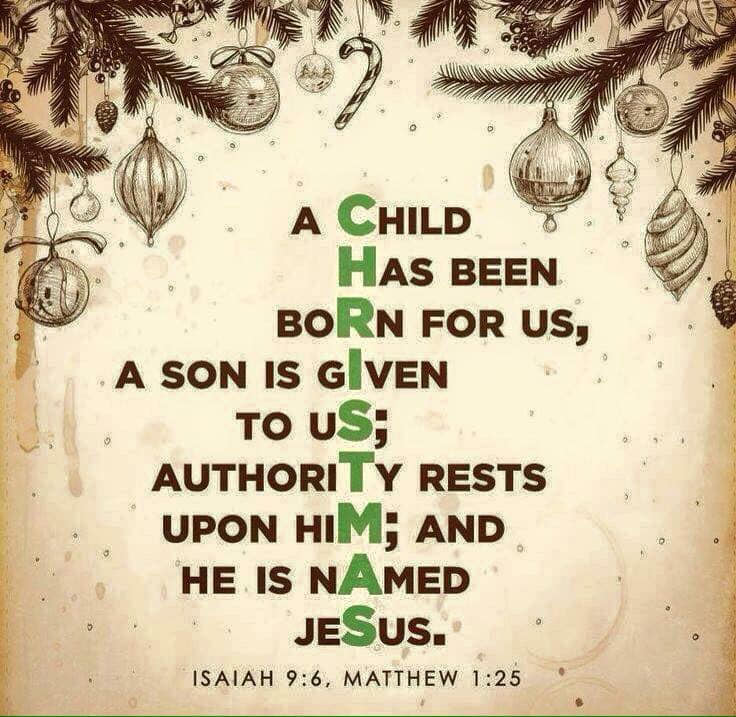
Christmas Acrostic: A child has been born for us; A Son is given to us; Authority rests upon Him; and He is Named Jesus.

Learn more

About this article

This article resulted from a collaboration between Christians on three continents. Many thanks to Ignatius, Irina, Amy Jo, Daniel, Sandi and Æthelwold for their research, writing and editing of this article.

Friday, November 29, 2019

Glory to God for All Things


The Akathist of Thanksgiving: “Glory to God for All Things”


This Akathist, also called the “Akathist of Thanksgiving,” was composed by Protopresbyter Gregory Petrov shortly before his death in a prison camp in 1940. The title is from the words of Saint John Chrysostom as he was dying in exile. It is a song of praise from amidst the most terrible sufferings.

Kontakion 1

Everlasting King, Thy will for our salvation is full of power. Thy right arm controls the whole course of human life. We give Thee thanks for all Thy mercies, seen and unseen. For eternal life, for the heavenly joys of the Kingdom which is to be. Grant mercy to us who sing Thy praise, both now and in the time to come. Glory to Thee, O God, from age to age.

Ikos 1

I was born a weak, defenceless child, but Thine angel spread his wings over my cradle to defend me. From birth until now Thy love has illumined my path, and has wondrously guided me towards the light of eternity; from birth until now the generous gifts of Thy providence have been marvelously showered upon me. I give Thee thanks, with all who have come to know Thee, who call upon Thy name.
Glory to Thee for calling me into being
Glory to Thee, showing me the beauty of the universe
Glory to Thee, spreading out before me heaven and earth
Like the pages in a book of eternal wisdom
Glory to Thee for Thine eternity in this fleeting world
Glory to Thee for Thy mercies, seen and unseen
Glory to Thee through every sigh of my sorrow
Glory to Thee for every step of my life’s journey
For every moment of glory
Glory to Thee, O God, from age to age

Kontakion 2

O Lord, how lovely it is to be Thy guest. Breeze full of scents; mountains reaching to the skies; waters like boundless mirrors, reflecting the sun’s golden rays and the scudding clouds. All nature murmurs mysteriously, breathing the depth of tenderness. Birds and beasts of the forest bear the imprint of Thy love. Blessed art thou, mother earth, in thy fleeting loveliness, which wakens our yearning for happiness that will last for ever, in the land where, amid beauty that grows not old, the cry rings out: Alleluia!

Ikos 2

Thou hast brought me into life as into an enchanted paradise. We have seen the sky like a chalice of deepest blue, where in the azure heights the birds are singing. We have listened to the soothing murmur of the forest and the melodious music of the streams. We have tasted fruit of fine flavour and the sweet-scented honey. We can live very well on Thine earth. It is a pleasure to be Thy guest.
Glory to Thee for the Feast Day of life
Glory to Thee for the perfume of lilies and roses
Glory to Thee for each different taste of berry and fruit
Glory to Thee for the sparkling silver of early morning dew
Glory to Thee for the joy of dawn’s awakening
Glory to Thee for the new life each day brings
Glory to Thee, O God, from age to age

Kontakion 3

It is the Holy Spirit who makes us find joy in each flower, the exquisite scent, the delicate colour, the beauty of the Most High in the tiniest of things. Glory and honour to the Spirit, the Giver of Life, who covers the fields with their carpet of flowers, crowns the harvest with gold, and gives to us the joy of gazing at it with our eyes. O be joyful and sing to Him: Alleluia!

Ikos 3

How glorious art Thou in the springtime, when every creature awakes to new life and joyfully sings Thy praises with a thousand tongues. Thou art the Source of Life, the Destroyer of Death. By the light of the moon, nightingales sing, and the valleys and hills lie like wedding garments, white as snow. All the earth is Thy promised bride awaiting her spotless husband. If the grass of the field is like this, how gloriously shall we be transfigured in the Second Coming after the Resurrection! How splendid our bodies, how spotless our souls!
Glory to Thee, bringing from the depth of the earth an endless variety of colours, tastes and scents
Glory to Thee for the warmth and tenderness of the world of nature
Glory to Thee for the numberless creatures around us
Glory to Thee for the depths of Thy wisdom, the whole world a living sign of it
Glory to Thee; on my knees, I kiss the traces of Thine unseen hand
Glory to Thee, enlightening us with the clearness of eternal life
Glory to Thee for the hope of the unutterable, imperishable beauty of immortality
Glory to Thee, O God, from age to age

Kontakion 4

How filled with sweetness are those whose thoughts dwell on Thee; how life-giving Thy holy Word. To speak with Thee is more soothing than anointing with oil; sweeter than the honeycomb. To pray to Thee lifts the spirit, refreshes the soul. Where Thou art not, there is only emptiness; hearts are smitten with sadness; nature, and life itself, become sorrowful; where Thou art, the soul is filled with abundance, and its song resounds like a torrent of life: Alleluia!

Ikos 4

When the sun is setting, when quietness falls like the peace of eternal sleep, and the silence of the spent day reigns, then in the splendour of its declining rays, filtering through the clouds, I see Thy dwelling-place: fiery and purple, gold and blue, they speak prophet-like of the ineffable beauty of Thy presence, and call to us in their majesty. We turn to the Father.
Glory to Thee at the hushed hour of nightfall
Glory to Thee, covering the earth with peace
Glory to Thee for the last ray of the sun as it sets
Glory to Thee for sleep’s repose that restores us
Glory to Thee for Thy goodness even in the time of darkness
When all the world is hidden from our eyes
Glory to Thee for the prayers offered by a trembling soul
Glory to Thee for the pledge of our reawakening
On that glorious last day, that day which has no evening
Glory to Thee, O God, from age to age

Kontakion 5

The dark storm clouds of life bring no terror to those in whose hearts Thy fire is burning brightly. Outside is the darkness of the whirlwind, the terror and howling of the storm, but in the heart, in the presence of Christ, there is light and peace, silence: Alleluia!

Ikos 5

I see Thine heavens resplendent with stars. How glorious art Thou radiant with light! Eternity watches me by the rays of the distant stars. I am small, insignificant, but the Lord is at my side. Thy right arm guides me wherever I go.
Glory to Thee, ceaselessly watching over me
Glory to Thee for the encounters Thou dost arrange for me
Glory to Thee for the love of parents, for the faithfulness of friends
Glory to Thee for the humbleness of the animals which serve me
Glory to Thee for the unforgettable moments of life
Glory to Thee for the heart’s innocent joy
Glory to Thee for the joy of living
Moving and being able to return Thy love
Glory to Thee, O God, from age to age

Kontakion 6

How great and how close art Thou in the powerful track of the storm! How mighty Thy right arm in the blinding flash of the lightning! How awesome Thy majesty! The voice of the Lord fills the fields, it speaks in the rustling of the trees. The voice of the Lord is in the thunder and the downpour. The voice of the Lord is heard above the waters. Praise be to Thee in the roar of mountains ablaze. Thou dost shake the earth like a garment; Thou dost pile up to the sky the waves of the sea. Praise be to Thee, bringing low the pride of man. Thou dost bring from his heart a cry of Penitence: Alleluia!

Ikos 6

When the lightning flash has lit up the camp dining hall, how feeble seems the light from the lamp. Thus dost Thou, like the lightning, unexpectedly light up my heart with flashes of intense joy. After Thy blinding light, how drab, how colourless, how illusory all else seems. My souls clings to Thee.
Glory to Thee, the highest peak of men’s dreaming
Glory to Thee for our unquenchable thirst for communion with God
Glory to Thee, making us dissatisfied with earthly things
Glory to Thee, turning on us Thine healing rays
Glory to Thee, subduing the power of the spirits of darkness
And dooming to death every evil
Glory to Thee for the signs of Thy presence
For the joy of hearing Thy voice and living in Thy love
Glory to Thee, O God, from age to age

Kontakion 7

In the wondrous blending of sounds it is Thy call we hear; in the harmony of many voices, in the sublime beauty of music, in the glory of the works of great composers: Thou leadest us to the threshold of paradise to come, and to the choirs of angels. All true beauty has the power to draw the soul towards Thee, and to make it sing in ecstasy: Alleluia!

Ikos 7

The breath of Thine Holy Spirit inspires artists, poets and scientists. The power of Thy supreme knowledge makes them prophets and interpreters of Thy laws, who reveal the depths of Thy creative wisdom. Their works speak unwittingly of Thee. How great art Thou in Thy creation! How great art Thou in man!
Glory to Thee, showing Thine unsurpassable power in the laws of the universe
Glory to Thee, for all nature is filled with Thy laws
Glory to Thee for what Thou hast revealed to us in Thy mercy
Glory to Thee for what Thou hast hidden from us in Thy wisdom
Glory to Thee for the inventiveness of the human mind
Glory to Thee for the dignity of man’s labour
Glory to Thee for the tongues of fire that bring inspiration
Glory to Thee, O God, from age to age

Kontakion 8

How near Thou art in the day of sickness. Thou Thyself visitest the sick; Thou Thyself bendest over the sufferer’s bed. His heart speaks to Thee. In the throes of sorrow and suffering Thou bringest peace and unexpected consolation. Thou art the comforter. Thou art the love which watches over and heals us. To Thee we sing the song: Alleluia!

Ikos 8

When in childhood I called upon Thee consciously for the first time, Thou didst hear my prayer, and Thou didst fill my heart with the blessing of peace. At that moment I knew Thy goodness and knew how blessed are those who turn to Thee. I started to call upon Thee night and day; and now even now I call upon Thy name.
Glory to Thee, satisfying my desires with good things
Glory to Thee, watching over me day and night
Glory to Thee, curing affliction and emptiness with the healing flow of time
Glory to Thee, no loss is irreparable in Thee, Giver of eternal life to all
Glory to Thee, making immortal all that is lofty and good
Glory to Thee, promising us the longed-for meeting with our loved ones who have died
Glory to Thee, O God, from age to age

Kontakion 9

Why is it that on a Feast Day the whole of nature mysteriously smiles? Why is it that then a heavenly gladness fills our hearts; a gladness far beyond that of earth and the very air in church and in the altar becomes luminous? It is the breath of Thy gracious love. It is the reflection of the glory of Mount Tabor. Then do heaven and earth sing Thy praise: Alleluia!

Ikos 9

When Thou didst call me to serve my brothers and filled my soul with humility, one of Thy deep, piercing rays shone into my heart; it became luminous, full of light like iron glowing in the furnace. I have seen Thy face, face of mystery and of unapproachable glory.
Glory to Thee, transfiguring our lives with deeds of love
Glory to Thee, making wonderfully Sweet the keeping of Thy commandments
Glory to Thee, making Thyself known where man shows mercy on his neighbour
Glory to Thee, sending us failure and misfortune that we may understand the sorrows of others
Glory to Thee, rewarding us so well for the good we do
Glory to Thee, welcoming the impulse of our heart’s love
Glory to Thee, raising to the heights of heaven every act of love in earth and sky
Glory to Thee, O God, from age to age

Kontakion 10

No one can put together what has crumbled into dust, but Thou canst restore a conscience turned to ashes. Thou canst restore to its former beauty a soul lost and without hope. With Thee, there is nothing that cannot be redeemed. Thou art love; Thou art Creator and Redeemer. We praise Thee, singing: Alleluia!

Ikos 10

Remember, my God, the fall of Lucifer full of pride, keep me safe with the power of Thy Grace; save me from falling away from Thee. Save me from doubt. Incline my heart to hear Thy mysterious voice every moment of my life. Incline my heart to call upon Thee, present in everything.
Glory to Thee for every happening
Every condition Thy providence has put me in
Glory to Thee for what Thou speakest to me in my heart
Glory to Thee for what Thou revealest to me, asleep or awake
Glory to Thee for scattering our vain imaginations
Glory to Thee for raising us from the slough of our passions through suffering
Glory to Thee for curing our pride of heart by humiliation
Glory to Thee, O God, from age to age

Kontakion 11

Across the cold chains of the centuries, I feel the warmth of Thy breath, I feel Thy blood pulsing in my veins. Part of time has already gone, but now Thou art the present. I stand by Thy Cross; I was the cause of it. I cast myself down in the dust before it. Here is the triumph of love, the victory of salvation. Here the centuries themselves cannot remain silent, singing Thy praises: Alleluia!

Ikos 11

Blessed are they that will share in the King’s Banquet: but already on earth Thou givest me a foretaste of this blessedness. How many times with Thine own hand hast Thou held out to me Thy Body and Thy Blood, and I, though a miserable sinner, have received this Mystery, and have tasted Thy love, so ineffable, so heavenly.
Glory to Thee for the unquenchable fire of Thy Grace
Glory to Thee, building Thy Church, a haven of peace in a tortured world
Glory to Thee for the life-giving water of Baptism in which we find new birth
Glory to Thee, restoring to the penitent purity white as the lily
Glory to Thee for the cup of salvation and the bread of eternal joy
Glory to Thee for exalting us to the highest heaven
Glory to Thee, O God, from age to age

Kontakion 12

How often have I seen the reflection of Thy glory in the faces of the dead. How resplendent they were, with beauty and heavenly joy. How ethereal, how translucent their faces. How triumphant over suffering and death, their felicity and peace. Even in the silence they were calling upon Thee. In the hour of my death, enlighten my soul, too, that it may cry out to Thee: Alleluia!

Ikos 12

What sort of praise can I give Thee? I have never heard the song of the Cherubim, a joy reserved for the spirits above. But I know the praises that nature sings to Thee. In winter, I have beheld how silently in the moonlight the whole earth offers Thee prayer, clad in its white mantle of snow, sparkling like diamonds. I have seen how the rising sun rejoices in Thee, how the song of the birds is a chorus of praise to Thee. I have heard the mysterious mutterings of the forests about Thee, and the winds singing Thy praise as they stir the waters. I have understood how the choirs of stars proclaim Thy glory as they move forever in the depths of infinite space. What is my poor worship! All nature obeys Thee, I do not. Yet while I live, I see Thy love, I long to thank Thee, and call upon Thy name.
Glory to Thee, giving us light
Glory to Thee, loving us with love so deep, divine and infinite
Glory to Thee, blessing us with light, and with the host of angels and saints
Glory to Thee, Father all-holy, promising us a share in Thy Kingdom
Glory to Thee, Holy Spirit, life-giving Sun of the world to come
Glory to Thee for all things, Holy and most merciful Trinity
Glory to Thee, O God, from age to age

Kontakion 13

Life-giving and merciful Trinity, receive my thanksgiving for all Thy goodness. Make us worthy of Thy blessings, so that, when we have brought to fruit the talents Thou hast entrusted to us, we may enter into the joy of our Lord, forever exulting in the shout of victory: Alleluia!
(repeat Kontakion 13 and Alleluia three times)

Ikos 1

I was born a weak, defenceless child, but Thine angel spread his wings over my cradle to defend me. From birth until now Thy love has illumined my path, and has wondrously guided me towards the light of eternity; from birth until now the generous gifts of Thy providence have been marvelously showered upon me. I give Thee thanks, with all who have come to know Thee, who call upon Thy name.
Glory to Thee for calling me into being
Glory to Thee, showing me the beauty of the universe
Glory to Thee, spreading out before me heaven and earth
Like the pages in a book of eternal wisdom
Glory to Thee for Thine eternity in this fleeting world
Glory to Thee for Thy mercies, seen and unseen
Glory to Thee through every sigh of my sorrow
Glory to Thee for every step of my life’s journey
For every moment of glory
Glory to Thee, O God, from age to age

Kontakion 1

Everlasting King, Thy will for our salvation is full of power. Thy right arm controls the whole course of human life. We give Thee thanks for all Thy mercies, seen and unseen. For eternal life, for the heavenly Joys of the Kingdom which is to be. Grant mercy to us who sing Thy praise, both now and in the time to come. Glory to Thee, O God, from age to age.

Wednesday, November 20, 2019

A Prayer

Heavenly Father, by the Holy Spirit, through the Precious Blood of your Son, I pray.  Thank you for the gentle, knowing, even sweet treatment of the police and jailers who were forced by politicians to arrest me for daring to expose a group of young people to the actual empirical evidence of modern science.

How could we have ever guessed that the assault on knowledge would grow so severe that to merely state secular non-religious empirical evidence would become a crime?   Of course, it is not actually a crime, but having offered the evidence they made up false charges against me.  In that, I joined the rank of Saint Paul who on more than one occasion faced false charges, because they did not like the TRUTH he taught.

The world has grown so dark that it was not the LOGOS, that is, the Truth of the Gospel for which false charges were leveled against me, but merely the "actual empirical evidence of modern science."

Modern Cosmology has CRASHED AND ALONG WITH IT MODERN PHYSICS.  There is not one wit of evidence that sustains it. It has been proved total fancy and mythology and the "gatekeepers" of the secular culture are suddenly without foundation and like the Idol Makers of Ephesus their livelihood is threatened and they wish to kill anyone who exposes them.   Saint Paul was beaten and left for dead, and I am so ashamed, I was arrested by two very nice gentlemen, guys I would be proud to call my son and grandson. And although the 52-year-old groused and tried to say we were the same age (he wanted to flex his experience) I am old enough to be his father, in fact, my oldest child is OLDER than him.   They were confused by the lies, but in the end, were so gentle and genteel, the goodness of their spirit showed through. 

Saint Paul was a young man, a teacher, an apostle, and ultimately a martyr; I am just an old man, a teacher, an old retired prison chaplain. Saint Paul taught the Eternal Logos and I just hinted at the philosophical Logos,
the Greek word variously meaning "ground", "word", "speech", "account", "reason", "proportion", and "discourse". It became a technical term in Western philosophy beginning with Heraclitus, who used the term for a principle of order and knowledge. I was targeted and arrested, accused of false crimes, not for preaching the Gospel, the Good News of the LOGOS, but merely for broaching the subject of the philosophical logos, that is the state of "actual empirical evidence of modern science."

Thank you, Lord, for the officers who arrested me and the jailers who were such fun and entertainment, bless them and give them all spiritual discernment. Have mercy on those who created and spoke the lies against me, that caused my arrest.  - Amen.

Monday, November 11, 2019

Discernment or Scaffolding?


fatherjohn.blogspot.com

fatherjohn.blogspot.com

Discernment or Scaffolding?
+++

+++


Aristotle Papanikolaou has just had two articles posted on the misnamed "Public Orthodoxy" website. If you had any remaining doubts that they really intend to push for the full acceptance of sodomy by the Church, these articles should remove them. I will respond to the second one in a separate article. This article is in response to ""Orthodox Morality" On Sex or an Ethics of Sex?"

Misusing the Writings of the Fathers
 
Papanikolaou begins his piece with this anecdote:
"Perhaps my point is best illustrated through a story: During the fall 1999 semester, I taught at Holy Cross Greek Orthodox School of Theology in Brookline, MA, a course on Ethics. We were discussing St. Maximus the Confessor on virtues and how the development of virtues enables relations, and in so doing, makes space for the presence of God. I then asked the students that if two people (I did not mention gender) were living together in friendship for fifty years and manifesting the virtues, would this be an example of communion and participation in God. They all said yes. I then asked whether the fact that they had sex would negate the good resulting from their virtuous friendship:  half said it would, while the other half got the point that I will try to articulate in this short, two-part essay.

As this story illustrates, ecclesial ethics on sexuality have been primarily about sex and the criteria for establishing a morally right sex act."
It seems almost every article recently published by "Public Orthodoxy" makes some reference to St. Maximus the Confessor. One would almost get the impression that St. Maximus was some pot smoking hippie, who advocated free love, and sodomy. However, in a recent Twitter exchange on the subject, Papanikolaou acknowledged that in fact St. Maximus believed that any sex that was not for the purpose of procreation, and within lawful marriage, was sinful. That would obviously preclude homosexual sex, and yet these people continue to disingenuously appeal to his authority as if he supported in the slightest their agenda. Why do they do this? Because St. Maximus was a very deep thinker, and many of his writings sound very obscure to the casual reader... and so they use this obscurity as a smoke screen, since they cannot honestly cite either Scripture or the Fathers in support of their renovationist and homosexualist agenda. More on this when we deal with the second article by Papanikolaou.
"From the start, someone might argue that there is nothing to talk about, as the Church’s teaching on sex has been clear and succinct from the beginning. It must be admitted that the overwhelming body of shared authoritative sources of the Orthodox Tradition—Scripture, Councils, Writings/Sayings of Saints, Canons, Liturgy—does limit sexual activity to marriage, with some even restricting the performance of the sexual act for procreation. This raises the question of what can or cannot be talked about in the Church; it is a question of how we should interpret these shared authoritative sources."
For starters, as we decide how to interpret these shared authoritative sources, the "overwhelming body" of which teach that sex outside of lawful heterosexual marriage is sinful -- which of them do not teach that? The verdict is not just "overwhelming," it is unanimous. They have literally nothing to support their position, and so they can only try to use specious arguments which appeal to obscure texts, while ignoring all we know about the Fathers who wrote them.
"Recently, the phrase “Orthodox morality” has been invoked to name a definitive and unchangeable body of teaching on moral rules, but one cannot find such an expression in any of the languages—Greek, Syriac, Coptic, Armenian—used for the texts that have been constitutive for the Orthodox Tradition."
"Morality" is certainly not a new concept in the Church. The only reason why one would perhaps not have needed to use the term "Orthodox" to modify "morality" in the past is because in the history of the Church, even among heretics, few have ever challenged what everyone has always understood as Christian morality -- and within the Church, this was unheard of. Now, however, we have people who claim to be Christian and even claim to be Orthodox who would have us believe that it is acceptable for a Christian man to have sex with another man, not repent of that, and still receive communion. So now, what is Orthodox morality is a matter in dispute, at least by some.

The Nicolaitans and Moral Heresy

"Some even argue that the word “heresy” was used for moral infractions and bring up as proof the Nicolaitans. The Apostle makes passing reference to the Nicolaitans for both their works and teaching (Rev. 2.6, 15), after which they are mentioned only rarely and linked to Gnosticism (St. Irenaeus, Against the Heresies, 3.11). They came to be included in the lists of “heretics” as a result of this affinity with Gnosticism and not for the acts of eating food sacrificed to idols or sexual immorality."
Here Papanikolaou is referencing exchanges he and I have had on this subject, but he is misrepresenting what I have said. I never said that moral infractions (i.e. the actual sins) are heresies. I said teaching that a sin is not really a sin is a heresy. I in fact have repeatedly clarified that this is what I was saying, and so to continue to misrepresent what I have said is simply dishonest.
The Nicolaitans were not heretics because they struggled with certain sins -- they were heretics because they taught that one need not struggle with certain sins, namely with regard to sexual immorality. Papanikolaou claims that they were condemned because they were Gnostics, and not because of their teachings on sexual immorality, but he cannot cite a single Father who would support his claim. The Fathers consistently taught that the Nicolaitans were indeed heretics, because of their teachings on sexual immorality and eating meat sacrificed to idols. Not a single Father gives any description of their teachings as involving any other specific heresy. So Papanikolaou is simply making things up here, because he does not want to have to deal with the implications of a clear example of a moral heresy.
He references St. Irenaeus, but what does St. Ireneaus say about the Nicolaitans when he actually describes why they are heretics, and what they taught?
"The Nicolaitans are the followers of that Nicolas who was one of the seven first ordained to the diaconate by the apostles. They lead lives of unrestrained indulgence. The character of these men is very plainly pointed out in the Apocalypse of John, [when they are represented] as teaching that it is a matter of indifference to practise adultery, and to eat things sacrificed to idols. Wherefore the Word has also spoken of them thus: “But this thou hast, that thou hatest the deeds of the Nicolaitans, which I also hate" (Irenaeus. Against Heresies, 1:26:3).
It is also interesting that he claims "The Apostle" makes reference to the Nicolaitans in Revelation 2:6,14-15, when in fact if you look up the text, in a red-letter edition of the Bible, you will see that these words are indeed in red. Christ Himself condemned this heresy, and not just in passing, but rather quite directly.
In Revelation 2:14, the Lord speaks of them thus:
"...thou hast there them that hold the doctrine of Balaam, who taught Balak to cast a stumblingblock before the children of Israel, to eat things sacrificed unto idols, and to commit fornication."
The Fathers consistently describe the heresy of the Nicolaitans in precisely these terms.
"For the Church, actions were never labeled with the adjectives of “Orthodox” or “heretical,” only beliefs centered around the Trinity or the person of Christ (the dogma on the icon is an extension of the debate on the person of Christ). As St. Basil argues in his “Letter to Amphilochius, Concerning the Canons,” “by heresies they meant those who were altogether broken off and alienated in matters relating to the actual faith” (Letter 188). The dogmatic proclamations of the Council were always separate from the canonical proclamations. Morality was codified in the canons of the Church. Yes—there must be a consistency between theology and ethics, between dogma and canons, but while dogmas are non-negotiable, canons are part of the ongoing discernment of the Church."
It is not the actions of the Nicolaitans that made them heretics, but their teachings about sexual immorality. Teachings are not actions, and teachings can be heretical, and teaching that a sin is not a sin is heretical. That the Nicolaitans were heretics is repeated throughout the Fathers. The nature of the heresy is only described in terms of their teachings on sexual immorality and eating meat sacrificed to idols. Therefore, continuing to claim that there is no such thing a heresy when it comes to teachings on morality is false.
For more information on this subject, see: Moral Heresy?

 
Red-herrings

"While the Church has always condemned both beliefs and actions, moral infractions are dealt with through penances: a sanction is imposed for breaking moral rules, whereas rejection of the divinity of Christ qualifies for “heresy.” This also explains why, as is readily evident, there are ample examples of once morally forbidden actions that the Church now allows. One of the clearest examples is usury, but the Church has also revised its guidance on divorce, slavery, consulting Jewish physicians, and other canonical matters."
These are red-herrings, but let me address them briefly:

Usury: It is certainly true that as times and circumstances change, how the Church applies unchanging principles to different situations will vary... but that does not mean that the principles are up for grabs. In the case of charging interest, the Church was opposed to charging interest... in the context of a society that had currencies that did not inflate in value (being based on things like gold, silver, and copper that tended to either retain their value or increase in value over time), and in which individuals lent money to people without regulation, usually at exorbitant interest (i.e. actual usury), and in a context in which debtors who could not pay their debts ended up in prison or being sold into slavery (and quite likely their wives and children along with them). In our current context, in which the value of our money decreases with inflation, money is lent in a regulated fashion, in a context in which people who cannot pay their debts can walk away not only without paying the debt but in many cases without losing all that they have purchased with the money they borrowed, and without any fear of jail or slavery, things are just a wee bit different. In the former context, to lend money to the average person with interest was exploitative, and could lead to their complete and utter ruin. In our current context, when a bank refuses to lend to someone because the bank doubts their ability to repay the debt, this is considered to be an injustice. Anyone lending money at no interest today will not only not have the use of their money in the mean time, but will be repaid with money that is worth less than it was when it was lent in the first place. And of course they also run the risk of not being paid back at all, and without that risk having any potential benefit to themselves. To argue that the fact that the Church does not treat these very different circumstances in the same way therefore means that gay sex may not really be a sin is not an argument made by a person who desires to illuminate the truth -- it is the argument of one who willfully obscures the truth.

Divorce: Has the Church "revised" its stance on divorce? Christ taught that one should not divorce except for cases of infidelity (Matthew 19:1-10). St. Paul speaks of one further reason for divorce, and that is abandonment, in which case he says "A brother or a sister is not under bondage in such cases" (1 Corinthians 7:10-15). All the legitimate reasons for divorce are extrapolations from these two teachings. For example, if a husband beats the snot out of his wife or abuses their children, this is taken to be a form of abandonment, even though the husband may not desire to leave the home, because his actions force the wife to leave the home, if he cannot otherwise be made to change his behavior. Divorce is in fact provided for in the canons, and even for those who are the guilty party in a divorce, there is a path to restoration in the Church. Divorce is always a sin on the part of at least one of the spouses. It is not an unpardonable sin.
Now are there bishops who are too lax when it comes to dealing with divorce? Probably so, but that actually is a pastoral matter, not a matter of a change in principle. In other words, you don't hear bishops or clergy teaching that divorce is no longer a sin. Likewise, when it comes to dealing with homosexuals, there are some clergy who may be too strict, and some who may be too lax, but so long as they all treat it as a sin, this is a matter of pastoral discretion. However, if a clergyman tells people that this sin is not really a sin, he is guilty of teaching error, as well as pastoral malpractice, because he is deluding his flock and giving them a bum steer on the path of salvation.
I am not David Bentley Harts biggest fan, but he actually does make some good points on this subject in his recent essay "Divorce, Annulment & Communion." See also "Divorce."

Slavery: I have addressed this previously in "What about Slavery in the Bible?" But in short, the Church has not reversed any principle here. No one was ever commanded to own slaves, and slavery was never seen as a good thing. Circumstances have changed. We still have some forms of involuntary servitude that are allowable by law (as a punishment for a crime, and in the form of the military draft). In the future, perhaps these will no longer be permissible by law. And perhaps in the future, society may decide that paying someone to flip hamburgers for only $7.25 an hour is immoral too. None of this changes the principles of Scripture or the canons.

Jewish Physicians: In the ancient world, there was no such thing as secular medicine as we know it today. At the time of the canon in question, Non-Christian Jewish doctors mixed their beliefs with their practice of medicine and so it was a religious issue for a Christian to go to such a doctor. Going to see a modern secular physician is an entirely different matter. If one went to a Jewish doctor who mixed faith healing into his practice, then this canon would apply, but I don't know of any modern examples of such things.
Unlike these red herrings, there is nothing about sodomy that has changed since the times the Scriptures and canons of the Church were written. Only if you don't really believe in the inspiration of the Scriptures, or the guidance of the Holy Spirit over the Church would you think that we might need to revise the teachings of the Church on an issue about which the Church has been so clear.

Biblical Morality
Papanikolaou argues that speaking of "biblical morality" muddies the water, but then proceeds to muddy the water himself by trying to conflate Old Testament ceremonial law, and the moral law:
"How can we be sure that our ongoing discernment within the Church is faithful to the Tradition? Some might define this faithfulness in terms of “biblical morality” or in terms of length of time the Church has proclaimed a particular moral principle, moral rule, or canonical prohibition. Phrases like “biblical morality” muddy the waters as it gives the impression that morality is reducible to literal interpretation of injunctions from the Bible. One look at Leviticus would dispel such a way of interpreting the Tradition of our Church, not to mention the New Testament prohibitions that the Church today does not follow to the letter (Mk 10:11-12 [depending on how one interprets this obscure passage]; 1 Cor 11:6, 14:34). Orthodox Christianity is a religion of the person, not of the book, and the Scriptures, which are foundational, authoritative, and sacred, point to the person of Christ who becomes the hermeneutical key for how to read Scripture."
He brings up Leviticus, and obviously is referencing the many ceremonial laws that we in the Church do not observe. The Fathers make a distinction between the moral law of the Old Testament, ceremonial laws, and purely civil laws. Even in the Old Testament, you never hear of a Prophet condemning non-Israelites for things like eating shrimp, or having garments made from different kinds of cloth. I have addressed this question in more detail in "Shrimp and Homosexuality" and "The Continuing Validity of the Moral Law of the Old Testament."
He then again brings up slavery, and laws and canons that regulate it. I have already addressed the question of whether such things constitute an endorsement of slavery in "Laws about Slavery." If there were laws and canons that required one own slaves, and then the Church later reversed them, or if there were laws and canons which prohibited slavery, but then the Church later reversed them, Papanikolaou would have an argument. But this is not the case.

Scaffolding

"Some might argue that to say that ethical norms and practices are subject to discussion is a form of relativism and a result of being influenced by secular, modern, liberal discourse that is diametrically opposed to Orthodoxy. First, discernment is part of the Tradition of the Church and it does not involve relativism since there is a clear telos in sight for this process of discernment—theosis. Second, “diametrical opposition” is itself a form of dualism that is theologically problematic, since the Holy Spirit is “every present and fills all things.” In fact, all heresies are a form of dualism, and the dogmatic Tradition around the person of Christ resisted this absolute dualism between the created and the Uncreated. Moreover, the Fathers and Mothers of our Tradition have always identified what is good in Greek pagan philosophy. Is recognizing what was right in Platonism a capitulation to Greek pagan thought? The very structure of the soul used by St. Maximus (see part 2) to make sense of a life in theosis is itself an appropriation from Greek pagan philosophy. Does that invalidate the theological anthropology of St. Maximus? Finally, why is discerning ethical norms in light of new information a surrender to a diametrically opposed form of discourse? Could not the absolute rejection of modern, liberal discourse itself be a form of defining Orthodoxy in light of this self-opposition? And if the opposition itself is what is defining Orthodoxy, is this distorted apophaticism—we are what we are not—really being faithful to the Orthodoxy that in the end is about our ascent toward union with God?"
So we have a moral issue that Papanikolaou admits the Scripture and Fathers "overwhelmingly" address in a very clear manner. In other words, God has spoken. And yet Papanikolaou says we nevertheless need to use "discernment" on this issue. So he wishes to put a question mark where God has placed a period, if not an exclamation point. This, he wishes to argue, is how the Church "does  theology." This is in fact not how the Church has ever done theology, but it is how the devil does it.
"Now the serpent was more subtle than any beast of the field which the Lord God had made. And he said unto the woman, Yea, hath God said, Ye shall not eat of every tree of the garden? And the woman said unto the serpent, We may eat of the fruit of the trees of the garden: but of the fruit of the tree which is in the midst of the garden, God hath said, Ye shall not eat of it, neither shall ye touch it, lest ye die. And the serpent said unto the woman, Ye shall not surely die: for God doth know that in the day ye eat thereof, then your eyes shall be opened, and ye shall be as gods, knowing good and evil" (Genesis 3:1-5).
Papanikolaou and his fellow travelers say "We're just asking questions." The devil was just asking questions too. "Did God really say that?" And then after "just asking questions" the devil went on to undermine what God had said, in order to persuade Eve that it was actually OK to do precisely the opposite of what God in fact did say. This call for "dialogue" and "discernment" is not being called for because these folks aren't sure where the "dialogue" will lead. This "dialogue" is just the scaffolding necessary to construct the edifice they already have designed.
We have seen this movie before, and we know how it ends. No thank you.

For more information, see: 
Unitarian Morality With a Little "Theosis" Sprinkled on Top
The Living Church 2.0
Cultural Marxism and Public Orthodoxy
The Bible the Church and Homosexuality: Obscurantegesis vs the Truth
Sister Vassa on Homosexuality

Saturday, November 9, 2019

Eric CIAramella

Parody BS Warning
Russian FSB-GRU Profile of:

Eric Ciaramella Wiki, Age, Wife, Biography (CIA) Family & More, Deep State Rumor Blower and blower of other things.


Eric Ciaramella
Eric Ciaramella (born in 1986) is American CIA Anal-ist from Prospect, (Connecticut, United States). He worked with both Obama and the Trump administration on the intelligence officer position, we are not sure which intelligence offer this was.

Furthermore, he was the former National Council Security Staffer that . . . worked on the intelligence officer position

He feigns concerned about the discussions between the Presidents of Ukraine and the United States. In addition to this, an investigation report of the Real Clear Investigations came into light on October 30, 2019.


His information disclosed the political experts and websites like The Federalist and Washington Examiner. Matt Gaetz (Republican Congressman) shared the article link on the Twitter account. RCI cleared that Eric left the Security Council in mid-2017. He posted at the White House West Wing.

However, he affected due to the negative news in the media. He came back to the CIA headquarters Langley, Virginia. As per the Federal Reports, he was at the Obama office as the one certified democrat.

Profile, Early Life & Parents

Eric Ciaramella Bio
CIA Analyst, Eric Ciaramella was born in 1986 in the Prospect (age 33 years old, as in 2019). Still, no information recovered about his dad and mom responsible for his CIA FAKE NAME, from the internet sources. Both of them involved in their respective jobs in the government sectors. CIA FAMILY = MAFIA FAMILY.
He has two siblings in his family. Furthermore, he completed initial studies at the Woodland Regional High School, Beacon Hills. He passed out from Chase Collegiate School, Waterbury.
On the other hand, he majored in Russian and East European Studies at Yale University. He went to Harvard University and focused on Central Asia, Eastern Europe, and Russia.
Wiki/Bio
Real Full Birth NameEric Ciaramella.
Nick nameEric.
ProfessionCIA Analyst.
Famous forHis reports about President of USA and Ukraine meeting.
Age (As of 2019)33 years old.
Date of Birth (DOB), Birthday1986.
Birthplace/HometownProspect, (Connecticut, United States).
NationalityAmerican.
Sexuality (Gay or Lesbian)Straight front bent back.
GenderMale.
EthnicityWhite Caucasian Race.
ReligionChristianish.
Sun Sign (Zodiac Sign)Rat
House InVirginia, USA.
Physical Statistics
Height (Tall)Feet & Inches: 5' 8".
Centimeters: 173 cm.
Meters: 1.73 m.
WeightKilograms: 65 Kg.
Pounds: 143 lbs.
Shoe Size (UK)8.
Eye ColorBrown.
Hair ColorDark Brown.
Family
ParentsFather: Name not available.
Mother: Will Update Soon.
SiblingsUnknown.
Personal Life Relationship
Marital StatusUnmarried Orientation
Education
Highest QualificationMajored in Russian and East European Studies from Yale University.
SchoolWoodland Regional High School, Beacon Hills.
Alma Mater.1. Chase Collegiate School.
2. Yale University.
3. Harvard University.
Wealth
Net worth (approx.)$100K-$110K USD.
Salary, Income & Earnings$50K-$65K.

Some Lesser Known Facts about Eric Ciaramella

Eric Ciaramella Job & Salary
  • He has former ties with the associates of Obama.
  • National Security Council staffer, Eric accused of leaking their information in the media.
  • He placed in the World Bank after college.
  • A report about Russia’s rephrasing economy published in 2011.
  • In addition to this, he added his name to the great contributors’ list.
  • He designated as the Consultant in Poverty Reduction/Economic Management in the financial institution.
  • On the other hand, he listed as the guest in the 2016s lunch party with Italy’s Prime Minister.
  • He observed his duties closely with Vice President Joe Biden.
  • Moreover, he has secure connections with Alexander Chalupa (Researcher, Democratic National Committee).
  • Eric Ciaramella receives a monthly salary cheque of $50K-$60K US Dollars.
  • He researched on the EU and the Italian rural residents.
  • Additionally, he protested against the Professor of Arabic Department at Yale University.
  • He can quickly speak multiple languages like Ukrainian, Arabic, and Russian.

Google in their "Infinite Wisdom" just returned my Letters from the Gulag Blog - after four years.

 https://rumble.com/v73cowk-the-endtime-shite-show-pt-3-the-shakhanah-glorification-of-erika-kirk.html